


Why collaborations in science are so important
i-sense is one of three EPSRC Interdisciplinary Research Collaborations (IRCs). The research program is based in UCL’s London Centre for Nanotechnology and supports a multidisciplinary team of researchers who are working to develop the next generation of early-warning...
Turning a pinch of salt into an electrical switch
A team of scientists from the LCN at UCL, the University of Liverpool in the UK and the Advanced Microscopy Laboratory at the University of Zaragoza in Spain have discovered a way to induce and control a fundamental electrical switching behaviour by interfacing...
Fixing the positions of individual molecules on the surface of a single layer of silicon atoms
A new way to control the positioning of individual molecules on the surface of materials that are only a single layer of atoms thick has been discovered by a team of scientists from the LCN at UCL in the UK; the Japan Advanced Institute of Science and Technology...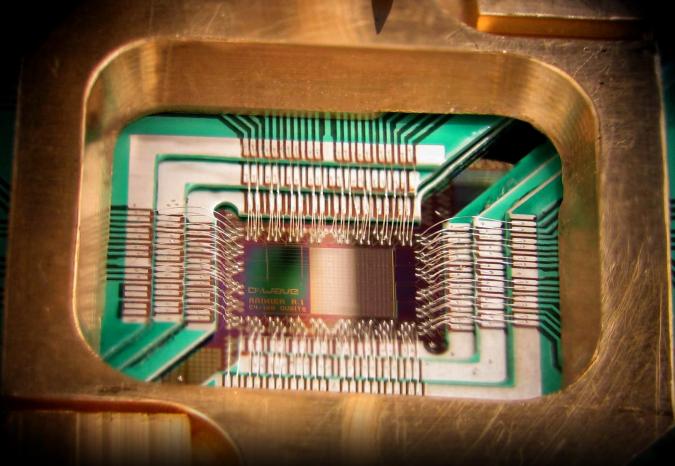
Observation of strong coupling and cavity quantum electrodynamics in a solid-state MASER at room-temperature
Creating practical solid-state, quantum computers that operate at room-temperature is a challenging task. This is because stored information is readily destroyed by thermal noise. A signature of a physical system’s ability to function as a quantum computer is the...