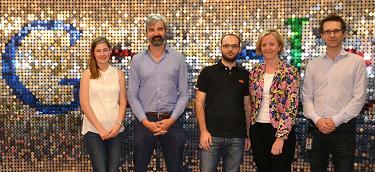

UCL and i-sense have joined forces with Google to contribute to the earlier global detection of influenza outbreaks.
Each year, seasonal influenza affects many thousands of people in the UK and millions worldwide, producing symptoms ranging from those similar to a common cold through to very severe symptoms and in some cases, death. In contrast, pandemic influenza is unpredictable and has the potential to cause severe illness and death in large numbers.
The Google Flu Trends service uses flu‐related search queries to map flu activity in near real‐time. These trends can be used to complement other influenza surveillance systems such as sentinel networks.
i‐sense, an EPSRC‐funded collaboration in Early‐Warning Sensing Systems for Infectious Diseases led by the London Centre of Nanotechnology at UCL, are combining the use of web data with low‐cost, mobile phone‐connected diagnostics for the early detection of infectious diseases, including flu.
In 2009, Google pioneered the development of search engines to track the spread of influenza (Ginsberg, Nature 2009)1.
i‐sense will work with Google to develop their models for estimating flu. This would support a more accurate picture of influenza‐like illnesses in the UK.
i-sense researcher Dr Vasileios Lampos, from the Department of Computer Science at UCL joined Google as a visiting researcher to work on improvements to modeling techniques using digital data.
Dr Lampos was one of the first to demonstrate the use of Twitter data to track flu, during his PhD at Bristol University (Lampos and Cristianini, 2010)2.
Steve Crossan, Product Manager at Google, said of the collaboration: “We’re very happy to have Dr Lampos join us and bring his expertise to the team as a visiting researcher. It’s a model we’re hoping to extend if successful”.
Professor Rachel McKendry, Director of i‐sense and Professor at the LCN, added: “We are delighted to form this collaboration with Google. This represents a significant milestone in our mission to build early-warning sensing systems to help protect populations from deadly pandemics”.
References
1. Ginsberg et al. Detecting influenza epidemics using search engine query data. Nature, 457, 1012–1014 (2009); DOI: 10.1038/nature07634
2. Lampos. V and Cristianini. N. Tracking the flu pandemic by monitoring the Social Web. Proceedings of Cognitive Information Processing, 10, 411-416 (2010); DOI: 10.1109/CIP.2010.5604088