
Quantum computers have the possibility of transforming the world’s computing infrastructure overnight, with an effectual quantum cloud forming to handle some of the most perplexing computational challenges. Problems that have been unsolvable with current computers-whether molecular modeling for drug development or optimization problems routinely encountered by logistics-dependent companies-would suddenly give way. Existing industries, including software design, nanotech, and machine learning, would be transformed, and massive new markets would grow up around them.
Not surprisingly, building such a computer entails a series of absurdly difficult theoretical and engineering challenges and recently the question of whether a given ‘black box’ exhibits large-scale quantum behaviour, or can be described by a classical model has attracted significant interest.
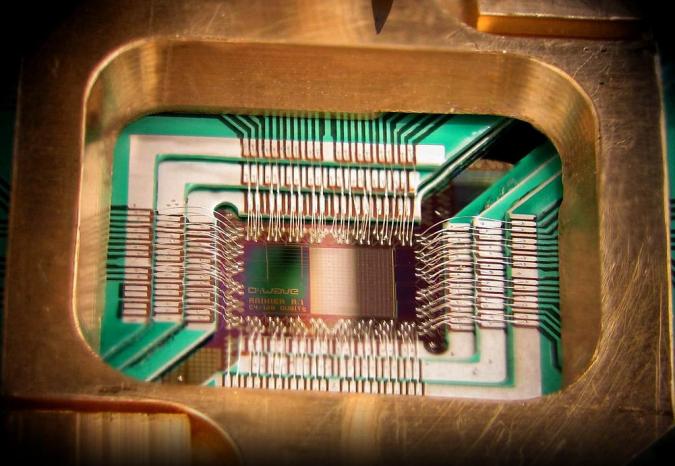
As part of a larger collaboration, researchers at the LCN have helped address this question by studying devices built by the quantum computing device manufacturer, D-wave; the findings of which were published in a Physical Review.
These devices are commercial computers that the user can only access via an input-output interface. Reports that the D-Wave devices implement quantum annealing (QA) with hundreds of qubits have attracted much attention recently and have also generated considerable debate. Uncertainty lies with the question of whether the existing experimental evidence suffices to rule out classical models and whether a quantum model can be found that is in full agreement with the evidence. Some commentators have questioned the ability of D-Wave’s systems to perform quantum calculations.
The goal of this work was to distinguish several classical models and a quantum adiabatic master model of a D-wave device and to decide which of the models was more akin to its quantum annealing behaviour. The findings of the research ruled out all classical models proposed to-date for the 503-qubit D-wave Two device in the ‘black box’ model and provide substantiated evidence for an open-system quantum dynamical description of the device that starts from a quantized energy level structure.
To view the article in full click here.