
The annual UK National Quantum Technologies Showcase took place on Friday 7 November welcoming over 2,500 in-person delegates to the Business Design Centre in London to explore the latest developments in quantum technology.
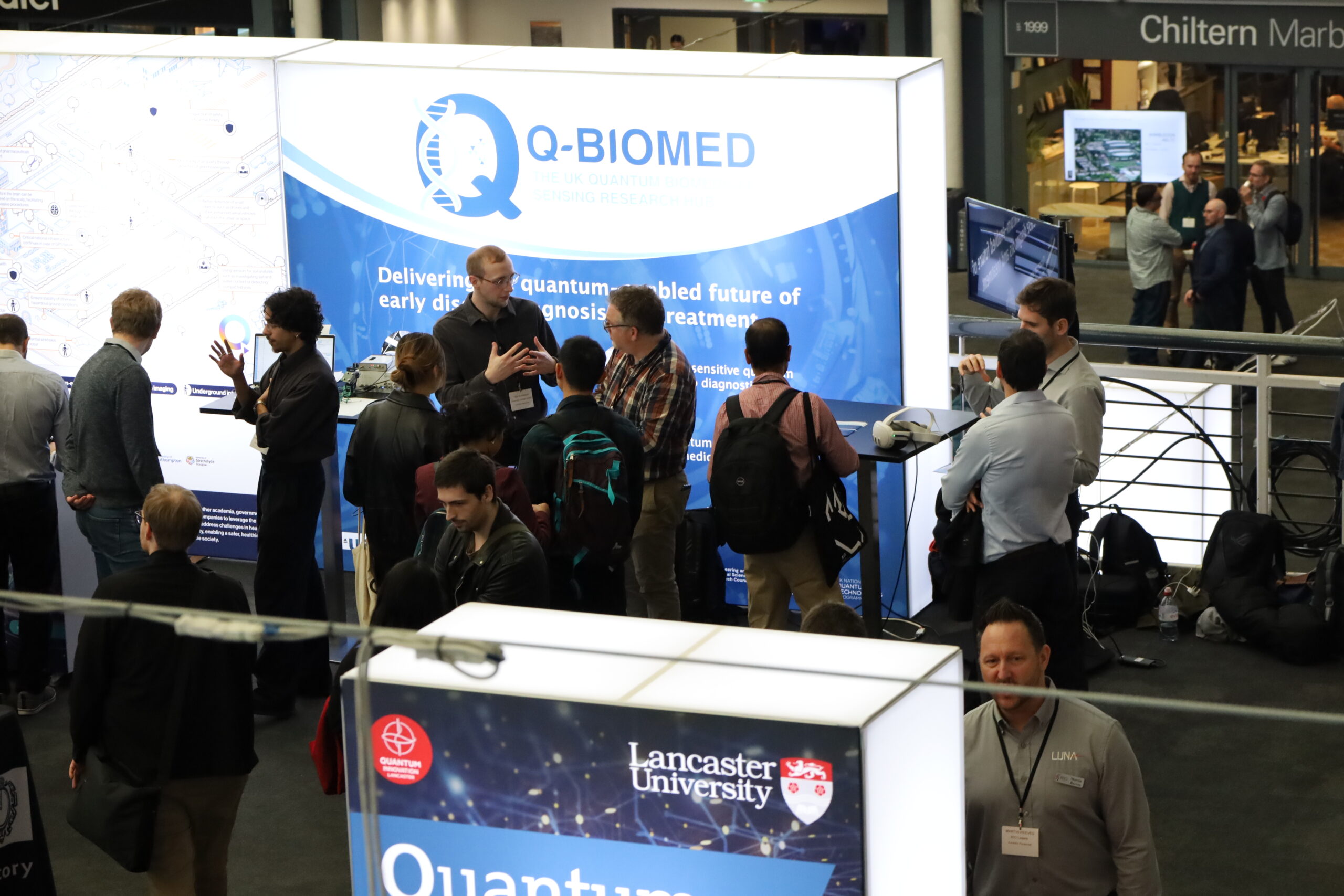
Q-BIOMED joined more than 100 exhibitors at the event, sharing our vision and research goals with visitors.
Interactive demonstrations
Our stand featured three interactive demos, showcasing the breadth of our work, from quantum-enhanced interventional tools to quantum sensors for basic biomedical research.
A team from the University of Warwick demonstrated their diamond magnetometer that can be integrated into a small sensor head measuring just 10mm wide. This technology has exciting applications in tracing magnetic particles for tracking cancer metastasis.
Visitors were also able to participate in a VR experience, which included a virtual tour around a lab at the University of Cambridge and the chance to join a nanodiamond on its journey through a cell on our quantum biosensing chip (Q-BiC).

For the first time, we also demonstrated our portable reader, which has been designed to read nanodiamond-based lateral flow assays. Built using affordable, off-the-shelf components, this device represents a major step towards accessible quantum-enabled diagnostics.
Highlighting the Quantum Hubs

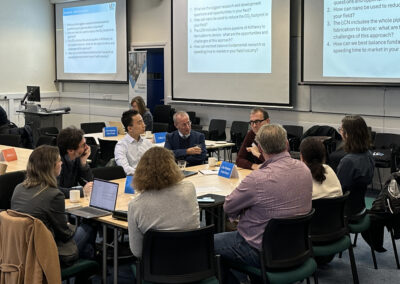
As part of the event, there was a session dedicated to the five National Quantum Technologies Programme Quantum Hubs titled: ‘New capabilities, societal impact and economic growth for the UK’.
Professor Dame Molly Stevens introduced Q-BIOMED, highlighting our vision and our key research areas.
Professor John Morton then took part in a panel discussion, which explored a variety of questions ranging from whether the Hubs have the right balance between blue skies thinking versus commercialisation, to how the Hubs are encouraging and supporting researchers from historically underrepresented groups.
The session was extremely popular among showcase attendees, with standing room only, reflecting strong interest in the Hubs and the opportunities for engagement.
Building connections
We’re excited to build on the collaboration opportunities and connections developed at the Showcase and we look forward to returning next year!
Launched in December 2024, the Quantum Biomedical Sensing (Q-BIOMED) Research Hub — the UK’s first hub for biomedicine — aims to deliver a step change in earlier disease diagnosis and treatment through developing a new generation of quantum sensors.
Developing new ultra-sensitive quantum-powered tests and sensors could enable much earlier diagnosis of disease such as cancer allowing for more rapid medical interventions and potentially saving lives. Ultimately, this could translate to better patient outcomes and help to reduce waiting lists, easing pressures on the NHS.
Q-BIOMED is part of a £160M network of five Quantum Technology Research Hubs, set up as part of the UK National Quantum Technology Programme, to ensure the UK benefits from the potential of quantum technologies.