Tracking wiggling biomolecules inside nanopores
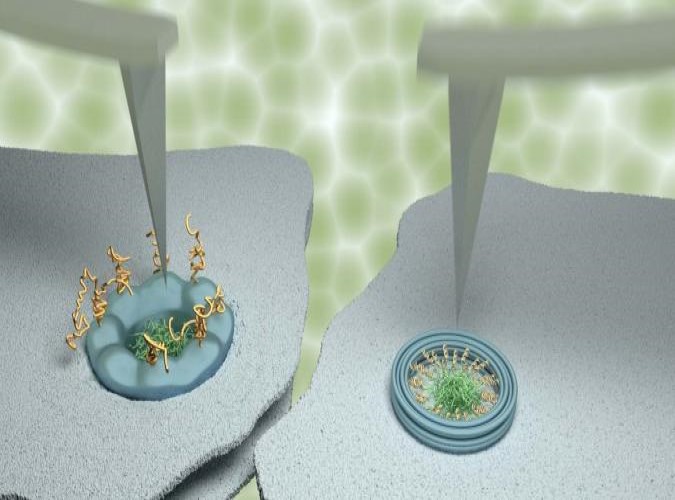
One of the early breakthroughs for nanotechnology was its success in visualising individual atoms and molecules. Nowadays, we can not only visualise molecules, but also capture videos of how they move. Yet at the nanoscale, how do you know if such motion is related to...
King’s opens new suite of photonics and nanofabrication laboratories
A new suite of photonics and nanofabrication laboratories has been officially opened on the King’s College London Strand Campus. The photonics laboratories house cutting-edge levitated optomechanics experiments and attosecond lasers as well as extending King’s...
Selangor Regional Powerhouse – the Microcosm of Asia
LCN’s Professor Jackman attended a one-day summit in Kuala Lumpur, Malaysia, to share ideas on future technologies with corporate leaders and government ministers on 23rd July 2019. Hosted by Selangor Chief Minister YAB Tuan Amirudin Shari, the event involved an...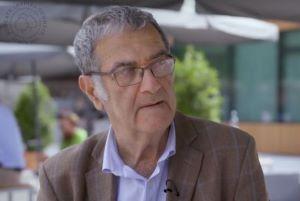
LCN researcher receives career advice from Nobel Laureate Serge Haroche
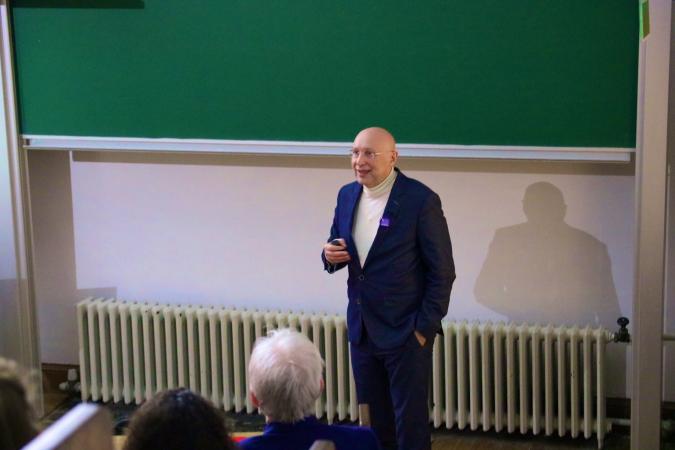
Once every year, around 30-40 Nobel Laureates convene in Lindau to meet the next generation of leading scientists: 600 undergraduates, PhD students, and post-doc researchers from all over the world. The Lindau Nobel Laureate Meetings foster the exchange among...