
Scientists from the London Centre for Nanotechnology (LCN) and National Physical Laboratory (NPL) have converted a breast milk protein into an artificial virus that kills bacteria by creating bullet holes in the membrane that surrounds and protects the bacteria. These “viral bullets” may represent a new weapon in the fight against antimicrobial resistance.
As well as providing all the energy and nutrients that infants need for the first months of life, breast milk protects against infectious diseases. Lactoferrin is a protein in milk, which provides antimicrobial protection to infants, effectively killing bacteria, fungi and even viruses.
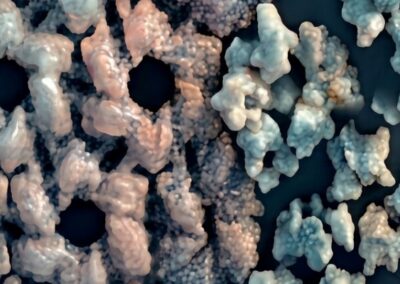
The antimicrobial activities of this protein are mainly due to a tiny fragment, less than a nanometre across, made up of six amino acids. The scientists at NPL designed virus-like capsules that contain this fragment, to attack bacterial cells by targeting and disrupting microbial membranes.
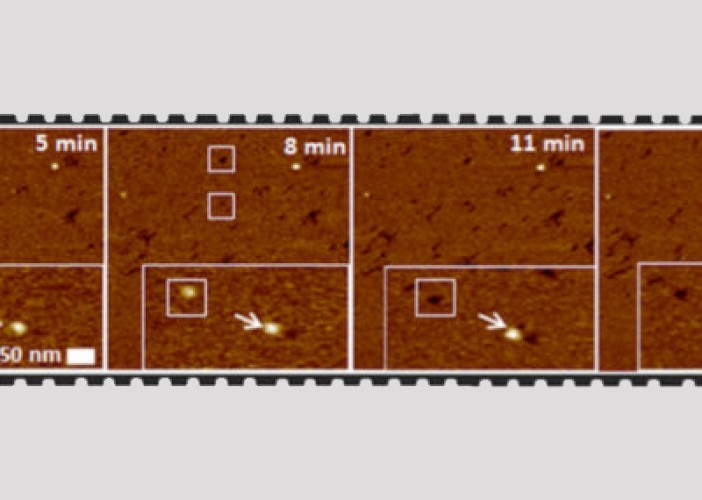
Hasan Alkassem, a joint LCN/NPL EngD student who worked on the project, explains: “To monitor the activity of the capsules in real time, we developed a real-time measurement platform using atomic force microscopy. The challenge was not just to see the capsules, but to also follow their attack on bacterial membranes. The result was striking: the capsules acted as projectiles porating the membranes and leaving bullet holes as a result.”
Remarkably, however, these capsules did not affect surrounding human cells. Instead, they infected them like viruses do. When viruses are inside human cells they release their genes, which then use the body’s cellular machinery to multiply and produce more viruses. But if viral genes are replaced with drugs or therapeutic genes, viruses become effective tools in the pursuit of gene therapy to cure many diseases, from cancer to cystic fibrosis.
The research team explored this possibility and inserted model genes into the capsules. These genes were designed to switch off, or silence, a target process in human cells. The capsules harmlessly delivered the genes into the cells and effectively promoted the desired silencing. With therapeutic genes, this capability could be used to treat disorders resulting from a single mutated gene. Sickle-cell disease, cystic fibrosis or Duchenne muscular dystrophy are incurable at present, but can be cured by correcting corresponding mutated genes. The capsules therefore can serve as delivery vehicles for cures, while at the same time suppressing bacterial infections that may complicate such a treatment.
This article has also been shared in on the NPL news page and also The Guardian and The Times