News

Perpetual Motion

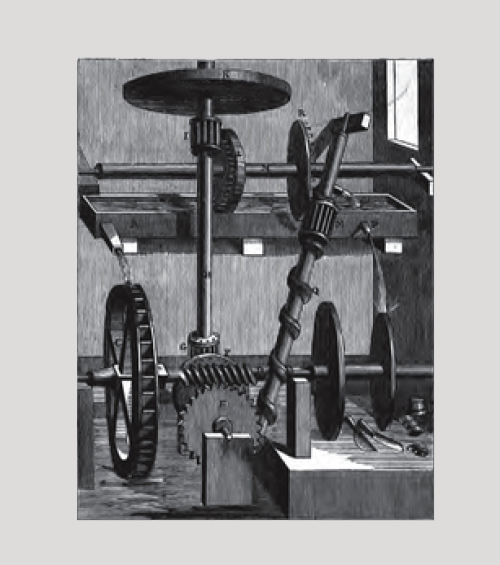
This week, Melvyn Bragg and guests – including Steven Bramwell, Professor of Physics and former Professor of Chemistry at University College London – discuss the rise of the idea of perpetual motion and its decline, in the 19th Century, with the Laws of Thermodynamics.

For hundreds of years, some of the greatest names in science thought there might be machines that could power themselves endlessly. Leonardo Da Vinci tested the idea of a constantly-spinning wheel and Robert Boyle tried to recirculate water from a draining flask. Gottfried Leibniz supported a friend, Orffyreus, who claimed he had built an ever-rotating wheel.

An increasing number of scientists voiced their doubts about perpetual motion, from the time of Galileo, but none could prove it was impossible. For scientists, the designs were a way of exploring the laws of nature. Others claimed their inventions actually worked, and promised a limitless supply of energy. It was not until the 19th Century that the picture became clearer, with the experiments of James Joule and Robert Mayer on the links between heat and work, and the establishment of the First and Second Laws of Thermodynamics.
 

More news

Poles of bacteria imaged in fine detail for the first time

Poles of bacteria imaged in fine detail for the first time

The study, published in the journal Nature Communications, used a new technique to keep live bacteria in place so the cells could be ... Find out more

LCN researchers awarded £5m project to build materials from designer proteins

LCN researchers awarded £5m project to build materials from designer proteins

LCN researchers at King's College London have been awarded £5 million from the Advanced Research and Invention Agency (ARIA) to ... Find out more

From proof-of-concept to scale-up: Metamaterials at Royce at Imperial

From proof-of-concept to scale-up: Metamaterials at Royce at Imperial

From proof-of-concept to scale-up: two days exploring the future of metamaterials in the UK. On 19–20 October, Royce at Imperial ... Find out more

Equipment & Facilities

EDUCATION

Training

Loading...
Privacy Overview

This website uses cookies so that we can provide you with the best user experience possible. Cookie information is stored in your browser and performs functions such as recognising you when you return to our website and helping our team to understand which sections of the website you find most interesting and useful.