
Researchers have long understood that biochemical signals affect cells, and recently it has been recognised that mechanical forces regulate a wide variety of biological processes, ranging from the expansion of our lungs when we breathe, to the extension of our skin every time that we stretch an arm.
LCN researchers from King’s College London, and University College London are part of a team that been awarded a £3.5m grant from the BBSRC to develop an integrated understanding of these bodily forces, known as mechanobiology, and how they influence our physiology.
The multidisciplinary team, lead by Professor Anne Ridley at Bristol University, aim to better understand mechanobiology through the careful experimental analysis of single molecules, cells, tissues and ultimately whole organisms under a variety of different conditions using a cutting-edge combination of techniques including 3D tissue culture, optogenetics and novel DNA-based mechanosensors. This integrated approach requires strategies from different areas of science.
Understanding how our bodies sense and respond to mechanical forces requires the many different skills of our team, from physics to chemistry and biology and from single molecules in cells to cell and tissue imaging Professor Anne Ridley, Project Lead, Bristol University
New knowledge generated here has the potential to influence our understanding of different physiological processes mediated by mechanical forces. We know that there are specialised proteins on cell surfaces that hold cells together and can recognise and react to mechanical forces from different origins. We want to investigate how exactly they work with each other to translate the physical cues they experience into biochemical messages in order to trigger an appropriate downstream biological response. Professor Ulrike Eggert, LCN & King’s College London
The ability of nanotechnology approaches to accurately measure forces of a magnitude relevant to proteins and cells is a key component of our interdisciplinary collaboration. Professor Guillaume Charras, LCN & UCL
The projects we have announced funding for are at the cutting edge of bioscience. Researchers are looking at the very fundamentals of the rules of life. By pushing forward the boundaries of knowledge, we can often make surprising and potentially world changing discoveries. Professor Melanie Welham, Executive Chair, BBSRC
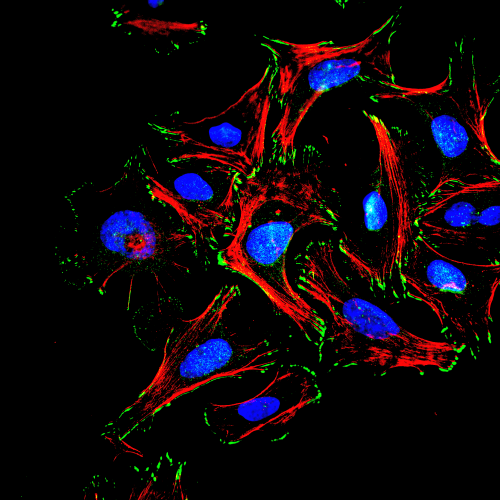
Image credit – Garcia-Manyes Lab
People: Guillaume Charras Ulrike Eggert Sergi Garcia-Manyes Katelyn Spillane