

Planetcare
By harnessing the unique properties of nanomaterials, researchers can develop innovative solutions for sustainable development and a healthier planet.
This involves developing new, more sustainable and eco-friendly materials, as well as creating new technologies that can help reduce carbon emissions and promote renewable energy, mitigating the impact of human activities on the environment.
Energy Transition
Researchers at the LCN tackle a range of technologies geared towards producing energy without relying on fossil fuels. In particular, we focus on the development of fuel cells, solar cells, materials for nuclear energy, and magnetocalorics.

Environmental monitoring and remediation
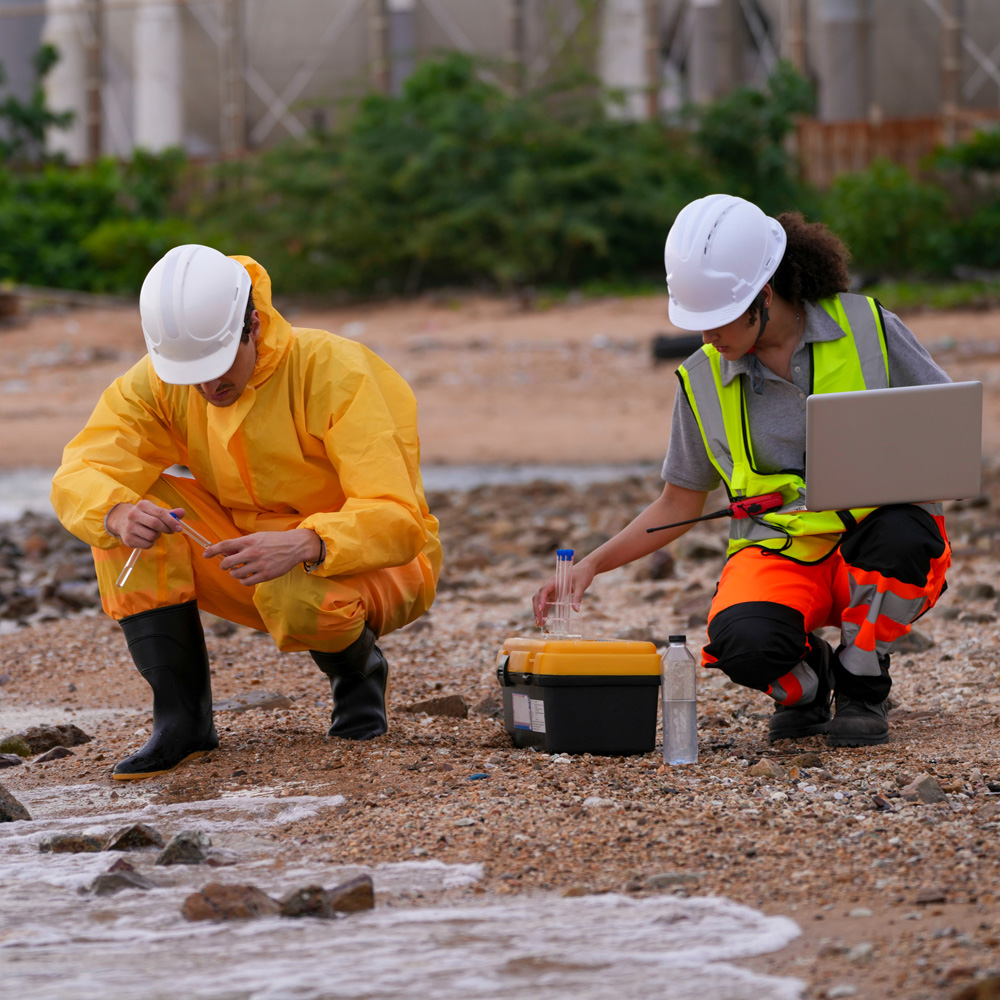
Nanotechnology plays a vital role in environmental monitoring and remediation by enabling the detection and removal of pollutants with high precision and efficiency. Nanosensors, often composed of materials like carbon nanotubes or metal nanoparticles, can detect trace levels of environmental contaminants such as heavy metals, pesticides, and gases in air, water, and soil. These technologies offer faster, more cost-effective, and scalable solutions compared to traditional methods, making nanotechnology a powerful tool for advancing environmental protection and sustainability.
Sustainable nanoscience and circularity
Sustainable nanoscience and circularity focuses on designing nanomaterials and technologies that minimise environmental impact while supporting long-term planetary health. This approach emphasises using renewable resources, reducing waste, and creating recyclable or biodegradable nanomaterials throughout their life cycle.

Our people
The LCN is home to 240 principal investigators, 300 post doctoral researchers, and 500 PhD students
Planetcare news
From proof-of-concept to scale-up: Metamaterials at Royce at Imperial
From proof-of-concept to scale-up: two days exploring the future of metamaterials in the UK. On 19–20 October, Royce at Imperial ... Find out more

Making waves: metamaterials at King’s
LCN researchers at King's are designing materials that steer light, sound and radio waves in ways ordinary materials can’t. A new ... Find out more