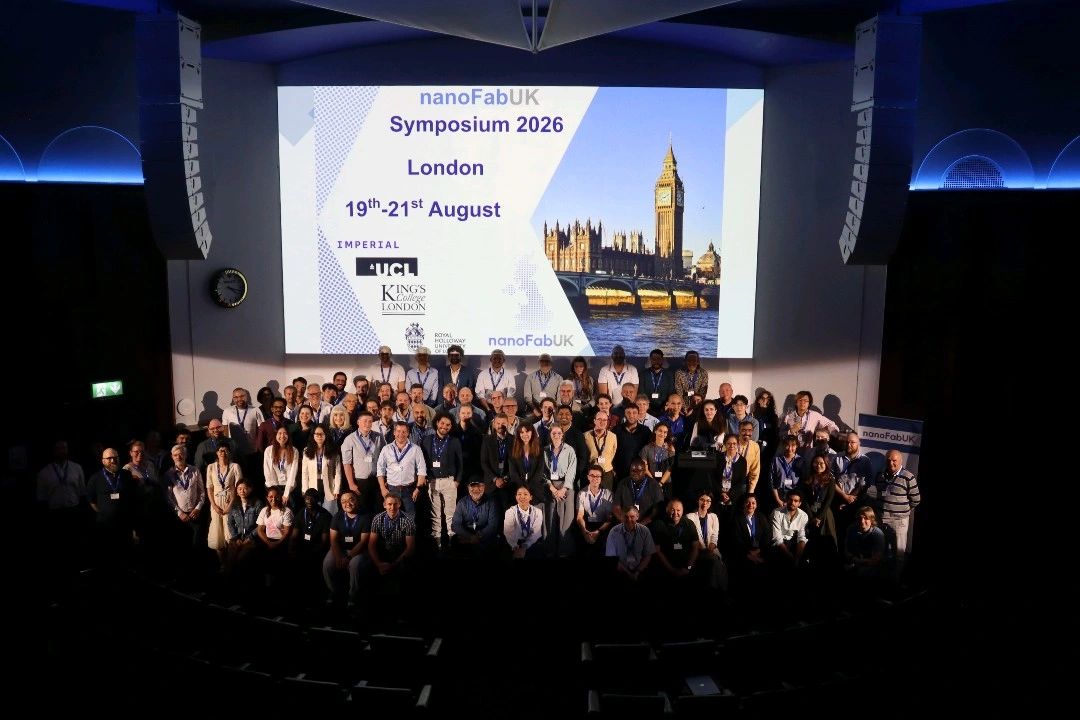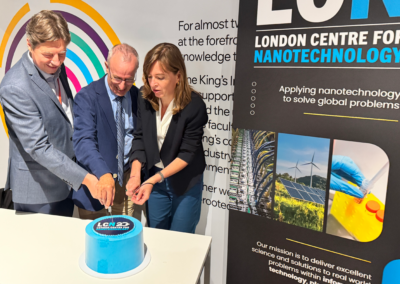

The London Centre for Nanotechnology (LCN) was proud to help host the nanoFabUK Symposium 2026. The nanoFabUK Annual Symposium provides a unique opportunity for Research and Technical Professionals (RTPs) to exchange knowledge, discuss emerging developments in nanofabrication and cleanroom operations, and support their professional development.
The symposium took place in London from 19 to 21 August and was jointly organised by Imperial College London, University College London, King’s College London and Royal Holloway, University of London.
nanoFabUK is a national collaborative platform that brings together leading UK nanofabrication facilities to strengthen research infrastructure, develop technical expertise and promote innovation across the sector. The network provides a forum for sharing knowledge, addressing common challenges and building new partnerships.
Hosted at the Royal Geographical Society in London, the symposium brought together technical specialists working in cleanroom and nanofabrication facilities, alongside exhibitors and industrial partners. The programme featured presentations, panel discussions, networking opportunities and an exhibition showcasing the latest technologies and capabilities supporting UK research and innovation.
Alongside the main symposium programme, attendees took part in a series of specialist satellite events hosted across London’s research infrastructure ecosystem. These included workshops and facility-based activities at LCN@UCL and Imperial College London, providing opportunities for hands-on learning and deeper engagement with advanced nanofabrication techniques and facilities. The final day featured a Beam and Lithography Workshop at LCN@UCL, alongside an NTPMI Growth UK Workshop hosted at Imperial’s White City campus.
The 2026 symposium represented a major collaborative effort between King’s, UCL, Imperial and Royal Holloway, with members of the organising committee working together over many months to deliver the event.
For the LCN, supporting nanoFabUK aligns closely with its commitment to enabling world-leading research through advanced facilities, technical expertise and shared infrastructure. The symposium provided an opportunity to showcase the breadth of capability across the UK nanofabrication community and to explore how facilities can continue to evolve in response to emerging research challenges.
As the event concluded, participants looked ahead to future opportunities to advance UK nanofabrication capabilities. The success of the London symposium demonstrated the importance of bringing together technical expertise, research infrastructure and industry to support innovation across the sector.