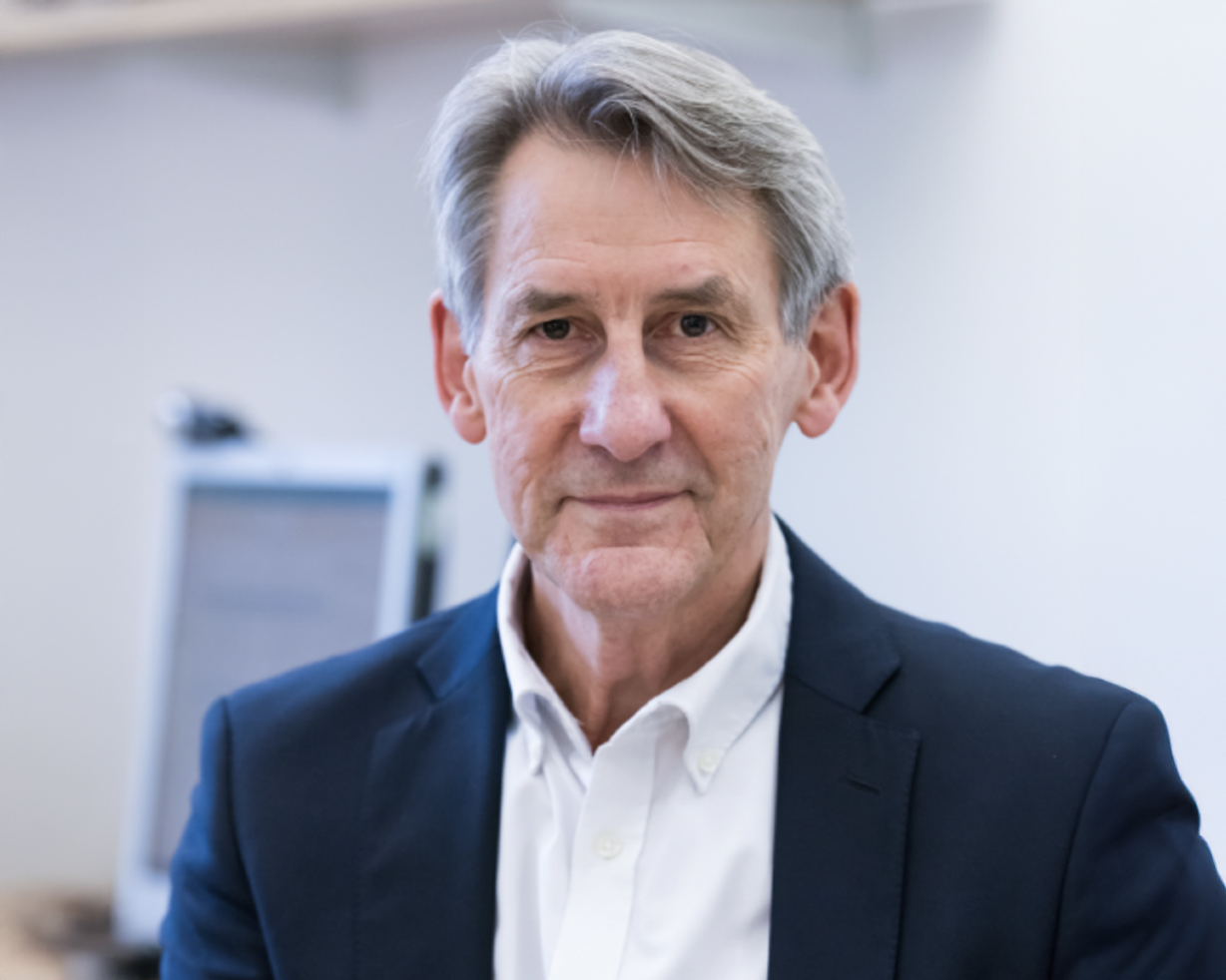

Professor Neil Alford has been elected a Fellow of the Royal Society!
This is a huge honour and a well-deserved recognition of Professor Alford many achievements in functional materials and particularly their microwave applications (with the MASER featuring prominently on many of the Department’s and Imperial’s outputs). Professor Alford has established an international reputation for his development of functional materials, notably oxides for radiofrequency/microwave applications. His work on the properties of microwave dielectrics has led to a better understanding of the theory and factors influencing dielectric loss in these industrially relevant materials. His research with colleagues at Imperial, NPL and UCL resulted in the first demonstration of a room temperature, earth’s field solid-state MASER (microwave amplification by stimulated emission of radiation) using Pentacene. It also resulted in the first observation of room temperature continuous wave masing in diamond with nitrogen-vacancy centres.
Neil is a longstanding member of the LCN and a tireless supporter of the centre. He has served on the LCN Executive Borad, as well as Head of the Department of Materials at Imperial.
Professor Alford said: “I am absolutely delighted to be elected to the Royal Society. I owe a huge debt of gratitude to all the extraordinary colleagues and collaborators that I have worked with over many years who have made this award possible.”