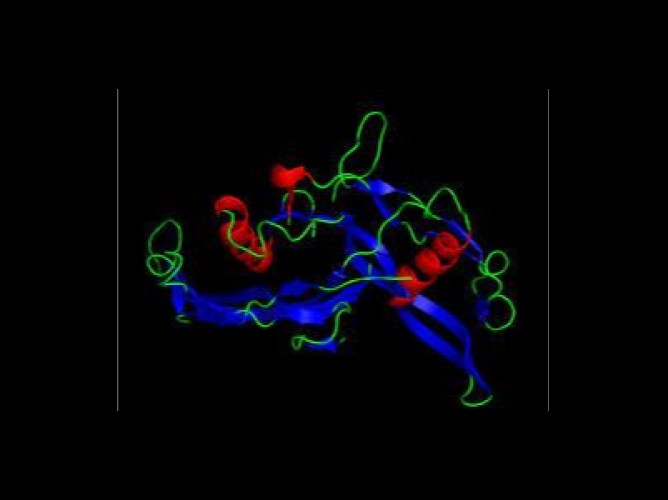
New antibiotics are desperately needed: without them antimicrobial resistance is predicted to kill more people than cancer. An international collaboration between scientists at the London Centre for Nanotechnology (LCN), University of Oxford, IBM, STFC Daresbury Laboratory and the National Physical Laboratory (NPL) has shown that our own bodies may provide an answer.
Along with most organisms, our body produces host defence peptides that can fight off low level bacterial infections. In their natural form, these peptides are not powerful enough to fight stronger infections. However, our study shows that these peptides can be modified into more efficient killers by adapting their native sequence. Through rational sequence design, the peptides’ mechanism of action can be dramatically altered, improving both the speed and potency of bacterial killing.
This study demonstrates how engineering native antimicrobial peptides into more potent bacterial killers could inspire a new route to generating novel antibiotics.

Figure: Atomic Force Microscopy shows changes in the mechanisms of action of a host defence peptide from surface disruption by the native peptide (left) to the creation of large holes (center left and right) and exfoliation of the bacterial membrane (right).
The work was funded by the UK’s Department for Business, Energy and Industrial Strategy, the Engineering and Physical Sciences Research Council (EP/G036675/1; EP/M506448/1; EP/M028100/1) and the Medical Research Council for an UKRI Innovation Fellowship to A.L.B.P. (MR/R024871).
Link to article in Scientific Reports