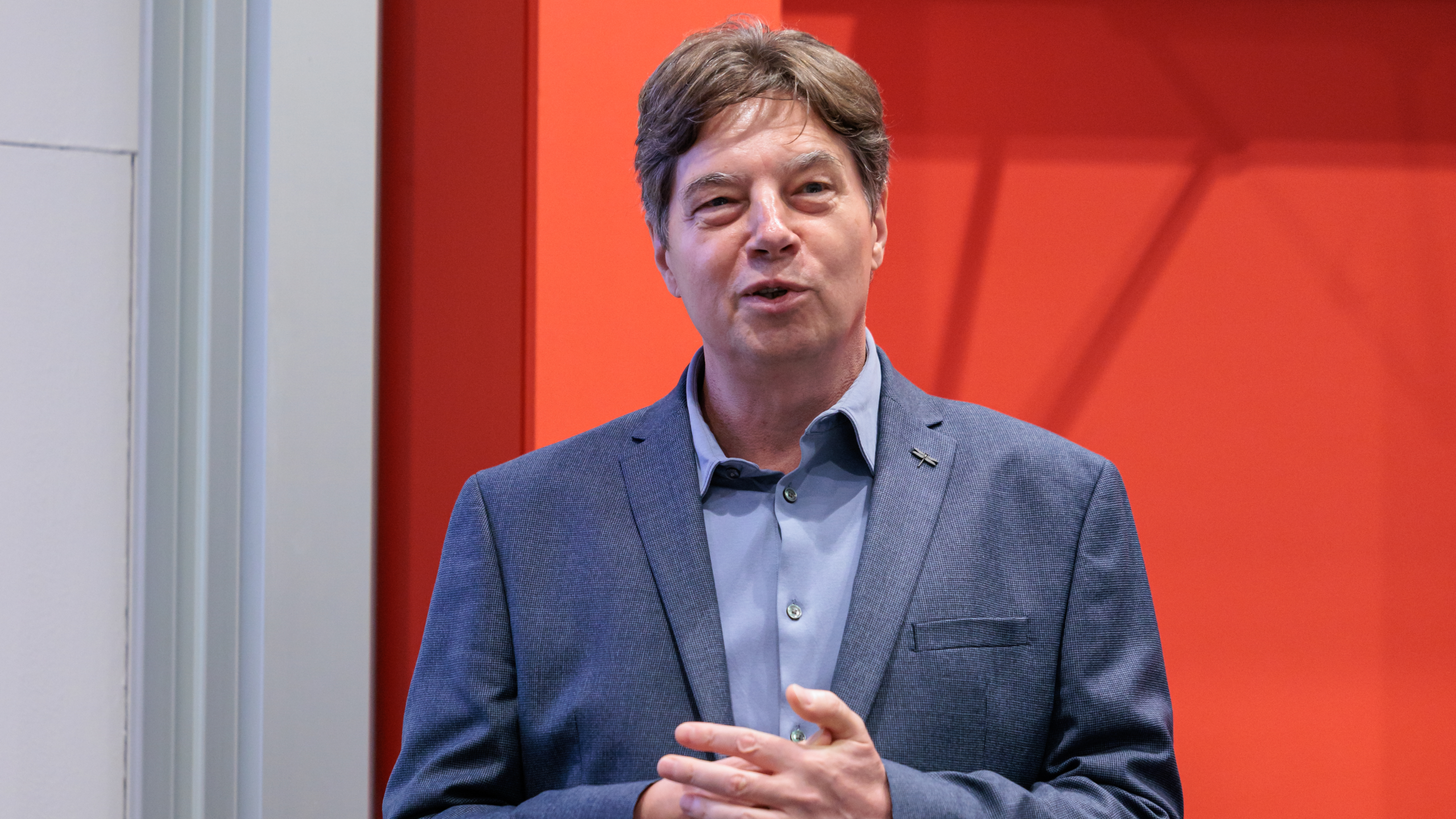

Professor Zayats joins a community of over 1,700 eminent engineers and innovators around the world driving societal impact.
LCN Co-Director, Professor Anatoly Zayats, has been elected as a Fellow of the Royal Academy of Engineering.
Elected on the Academy’s 50th anniversary by his peers, Professor Zayats joins leading figures in the fields of engineering and technology, pushing innovation in areas such as photonics, clean energy, AI, medicine and quantum science.
A world leader in photonics and nanotechnology, Anatoly has been recognised for his pioneering contributions in the fields of nanophotonics, metamaterials and plasmonics.
Throughout his career, he has led major research programmes that have advanced our understanding of how light interacts with matter at the nanoscale and translated fundamental discoveries into new technologies. His work has delivered significant academic and societal impact through international leadership, innovation and collaboration.
He currently leads the EPSRC Programme Grant Catalysis Meets Plasmonics (CPLAS), which is investigating how light-driven processes can be used to stimulate and control chemical transformations. Bringing together researchers from King’s College London, Imperial College London and the UK Catalysis Hub, alongside affiliated collaborators in Italy and Australia, the programme is helping to develop new approaches to sustainable chemical manufacturing and energy conversion.
CPLAS is the third EPSRC Programme Grant he has led, following the highly successful Active Plasmonics and Reactive Plasmonics programmes.
In addition, Anatoly has secured multiple European Research Council Advanced Grants, supporting pioneering research in plasmonic metamaterials, metasurfaces and nanoscale light-matter interactions.
Commenting on his award, Professor Zayats said:
“I am deeply honoured to be elected to the Royal Academy of Engineering. I strongly believe that fundamental scientific discoveries can, and should, lead to practical applications and help drive transformative technologies.
I have been incredibly fortunate to work with so many talented PhD students, postdocs and colleagues over the years. This achievement is very much a testament to their hard work, and I am grateful to everyone who has been part of this journey. Special thanks go to our industry partners.”